

Table of Contents
- What Makes Workwear Durable Enough for Construction Sites
- Quick Comparison: Durable Workwear Essentials
- Durable Work Trousers for Site Workers
- High-Visibility Workwear Standards EN ISO 20471
- Footwear and Layering for All-Weather Site Work
- Custom Embroidered Workwear for Construction Firms
- How to Choose and Maintain Durable Workwear
- Frequently Asked Questions
Last Updated: September 30, 2026
What Makes Workwear Durable Enough for Construction Sites
Durable workwear is clothing built to survive repeated industrial wear without losing its protective function, shape, or fit. The single biggest mistake buyers make is choosing on price per unit rather than cost per year of service.
Three things separate site-ready garments from ordinary clothing: abrasion resistance in the fabric, reinforced stitching at stress points, and correct fabric weight for the job. A trouser that fails at the knee seam after two months costs far more than one that lasts two years.
The other factor is compliance. Garments worn on site must meet the standards set by the Health and Safety Executive for the hazards present. Below, we break down what actually holds up, what each standard means, and how to kit out a full crew without overspending.
Quick Comparison: Durable Workwear Essentials
| Item | Price | Key Durability Feature | Best For |
|---|---|---|---|
| Pro RTX Pro Tradesman Trousers | £19.78 | Stretch fabric, reinforced stitching | Site work, industrial use |
| Pro RTX Pro Workwear Cargo Trousers | £18.13 | Polycotton build, multi-pocket | Trades and labour |
| Result Work-Guard Stirling Safety Boots | £41.17 | EN ISO 20345 S3 SRC, composite toe | General site footwear |
| Buckler Boots | £107.25 | S5, HRO, CI, SRC, waterproof | Wet, muddy, heavy-duty work |
| Pro RTX High Visibility Waistcoat | £3.28 | Reflective tape, fluorescent fabric | Low-light visibility |
Durable Work Trousers for Site Workers
The strongest work trousers combine a polycotton blend with reinforced stitching at the knees, seat, and pocket edges. These are the three points that fail first on a construction site.

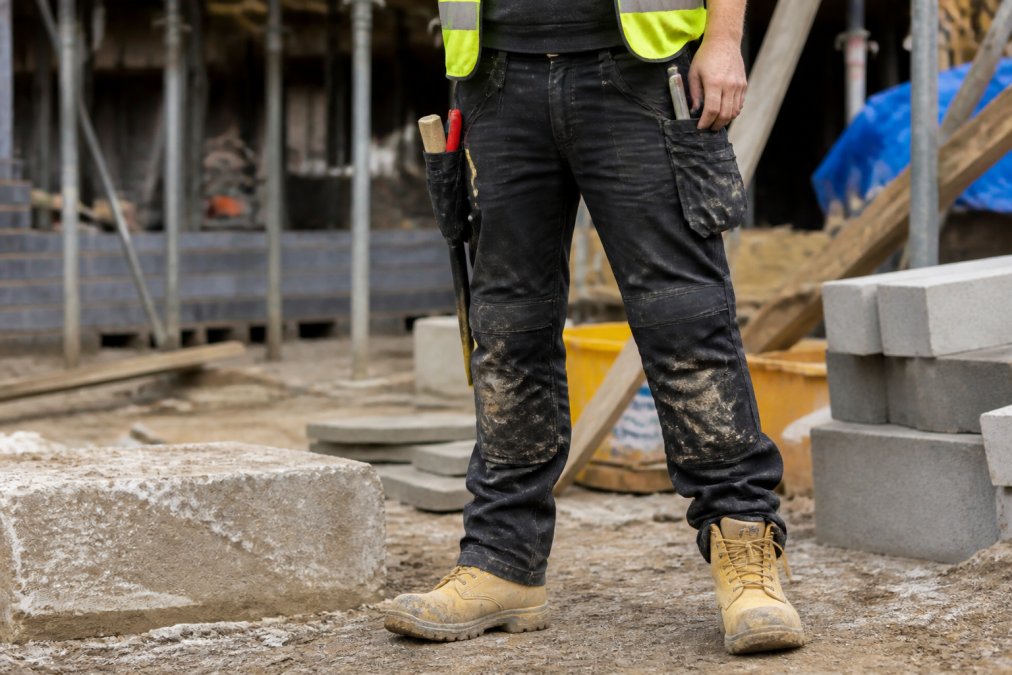
The Pro RTX Pro Tradesman Trousers (£19.78) use stretch-enhanced fabric for mobility and a multi-pocket design that keeps tools within reach. The Pro RTX Pro Workwear Cargo Trousers (£18.13) take a different approach: a regular fit with multiple cargo pockets, built for storage-heavy roles.

Both wash at 60°C, which matters for crews working with oils, dust, and grime. Look for multi-pocket utility layouts and articulated knees where the role involves frequent kneeling.
High-Visibility Workwear Standards EN ISO 20471
High-visibility clothing must meet EN ISO 20471, the standard governing reflective performance and fluorescent colour. Garments are classed by the amount of visible fluorescent and reflective material they carry, and the class required depends on the risk assessment for the site.
The Pro RTX High Visibility Waistcoat (£3.28) uses durable fluorescent polyester with reflective tape and Velcro fastening. It is lightweight enough to layer over existing clothing.
A genuine risk here is fading. Fluorescent fabric loses visibility with repeated washing and sun exposure, and a faded vest can drop below its rated class. Wash at 40°C as specified, and replace garments once the reflective tape dulls or the colour visibly fades. The British Standards Institution publishes the current standard.
Footwear and Layering for All-Weather Site Work
Footwear and layering are the two areas where crews most often get the specification wrong, and both are governed by standards that are easy to misread on a label.
Reading the EN ISO 20345 code correctly
Safety footwear is rated under EN ISO 20345. The base requirement is an SB rating, which covers a 200-joule toe cap. Everything after that is an add-on code, and the code tells you what the boot is actually built to handle:
- S1, SB plus closed seat area, antistatic properties, and energy absorption at the heel
- S2, S1 plus water penetration and absorption resistance in the upper
- S3, S2 plus a penetration-resistant midsole and a cleated outsole
- S4 and S5, the same progression in all-rubber or all-polymeric footwear, with S5 adding the penetration-resistant midsole
Additional codes matter as much as the S-rating. SRC is the highest slip-resistance rating, tested on both ceramic tile with dilute sodium lauryl sulphate and steel floor with glycerol. HRO means the outsole resists contact heat. CI means the boot is insulated against cold. AN means antistatic. A boot can be S3 and still be the wrong choice for a foundry or a freezer store if it lacks HRO or CI.
The Result Work-Guard Stirling Safety Boots (£41.17) carry an S3 SRC rating with a composite toe cap and midsole, water and oil resistance, and an energy-absorbing heel, a sensible default for general site work where metal detection is a consideration.
Pro RTX Pro Tradesman Trousers | Black →

A three-layer system that actually works year-round
Layering is not about wearing more; it is about moving moisture away from the skin and trapping insulating air without trapping sweat. The three-part system is base, mid, and outer, and each layer has a distinct job:
- Base layer, wicking next-to-skin layer. Look for polyester or a merino blend.
- Mid layer, the insulator. Fleece or a lightweight insulated jacket traps warm air. The Pro RTX Pro Micro Fleece Jacket (£14.27) works as a mid-layer under a shell, and the Pro RTX Hoodie (£12.37) uses twin-needle stitching to hold its shape through repeated 60°C washes.
- Outer layer, the weatherproof shell. This is the layer that must be breathable as well as waterproof.
Custom Embroidered Workwear for Construction Firms
Branded workwear does two jobs on a construction site: it identifies your crew, and it makes your firm look organised to clients and main contractors. The catch is durability of the branding itself.
How to Choose and Maintain Durable Workwear
Choosing workwear for a crew is a specification exercise, not a shopping exercise. Match the garment to the hazard first, then to the role, then to the budget. Buying on unit price alone is the most expensive route over a full year, because a garment that fails early is replaced at full cost.
A compliance checklist for site managers
Use this when specifying kit for a crew. It is designed to be worked through against the site risk assessment, not in isolation:
- Identify the hazard, visibility class, toe protection, slip rating, chemical, heat, or cold exposure
- Confirm the standard code on the garment label matches the risk assessment (EN ISO 20471 for high-vis, EN ISO 20345 for footwear, EN ISO 11612 for heat and flame where relevant)
- Check the class, not just the standard, high-vis is classed by the area of fluorescent and reflective material, and the class required depends on the site
- Verify fabric weight and denier suit the wear pattern of the role
- Confirm stitching is reinforced at knees, seat, and pocket edges
- Set a wash routine, 60°C for general workwear, 40°C for high-vis
- Replace high-vis once reflective tape dulls or colour fades below the rated class
- Standardise branding across sizes and batches with one locked logo file
Fit for every member of the crew
Construction workwear has traditionally been cut for a male frame, and that is a real problem for procurement managers kitting out a mixed crew. A garment that is too long in the body, too wide at the shoulder, or too loose at the waist is not just uncomfortable, it is a safety issue.
Maintenance that extends service life
Maintenance extends service life more than most buyers expect. Wash at the temperature on the label, avoid fabric softener because it coats the fibres and reduces wicking and reflective performance, and inspect high-vis and footwear regularly.
Repair before you replace
A repair programme is the cheapest durability measure available to most firms. A torn knee, a failed seam, or a missing button can usually be fixed by an in-house machinist or a local tailor for a fraction of the cost of a replacement garment. Set a simple rule: anything repairable goes to repair, anything that has lost its protective function goes to replacement.
Frequently Asked Questions
What safety standards should construction workwear meet?
High-visibility clothing for construction sites must meet EN ISO 20471, which sets requirements for reflective tape and fluorescent fabric. Safety footwear should meet EN ISO 20345, such as the S3 SRC rating on the Result Work-Guard Stirling Safety Boots. For wet conditions, S5-rated wellington boots like the Buckler BBZ6000 offer steel toe and midsole protection. Always check the certification label before buying, and replace garments when reflective tape becomes dull or damaged.
What are the most durable fabrics for construction site clothing?
Polycotton blends are the standard for durable work trousers because they resist abrasion and hold their shape after repeated 60°C washes. Look for reinforced stitching at stress points like pockets and knees. For layering, cotton-rich sweatshirts and micro fleece jackets provide warmth without bulk. The Pro RTX Pro Tradesman Trousers use a durable poly-cotton blend with reinforced stitching, making them a practical choice for site work.
How often should construction workwear be replaced?
Replace workwear when you notice thinning fabric, broken stitching, or faded high-visibility tape. On a busy site, trousers might last six to twelve months, while boots typically need replacing every six to twelve months depending on wear. High-visibility waistcoats should be replaced as soon as the reflective tape loses brightness, as this affects compliance. Regular 60°C washing helps maintain fabric integrity but inspect garments monthly for damage.
Is custom embroidered workwear worth it for construction crews?
Custom embroidered workwear helps with crew identification, client recognition, and brand consistency across multiple sites. It also makes it easier to spot your team in high-traffic areas. EG Clothing offers in-house embroidery and printing with fast turnaround, so logos stay consistent between batches. For construction firms, adding a company logo to high-visibility waistcoats and durable trousers creates a professional look without compromising safety features.
Kitting out a full construction crew means balancing safety compliance, durability, and cost across every role on site. EG Clothing supplies a complete range with in-house embroidery and print, fast turnaround, and trade pricing, so branding and compliance are handled in one order. Choose the right garments, set a proper wash routine, and your kit will last the season and beyond. Start branding with EG Clothing and get your crew site-ready.