

Last Updated: November 24, 2026
Quick Summary
To select the right size for scrub trousers, measure your waist, hips and inside leg with a soft tape measure, then read the size chart for the exact style you are buying. If your waist and hips point to different sizes, choose the larger size, and pick leg length separately to match your measured inseam.
- Measure your natural waistline just above the belly button and below the ribs, breathing normally.
- Measure hips around the fullest part of your seat, usually about 20cm below the waist.
- If your waist points to one size and your hips to another, go with the larger size.
- Match your measured inseam to short, regular or tall fittings, sizing up in length at the boundary.
- Wash one pair first before ordering for a team, as pure cotton scrubs can shrink.
Table of Contents
- Why Getting the Fit Right Matters on Long Shifts
- How to Measure for Scrub Trousers
- Reading a Scrub Trousers Size Chart
- Choosing the Right Scrub Trousers Leg Length
- What to Do When You Are Between Scrub Trousers Sizes
- Checking Fit for Movement, Rise and Work Tasks
- Fabric Stretch, Shrinkage and Laundering Effects
- Ordering Your Scrubs With Confidence
- Frequently Asked Questions
Why Getting the Fit Right Matters on Long Shifts
Most people get scrub trousers wrong for one simple reason: they guess. They pick their usual jeans size, order online, and hope for the best. Then a twelve-hour shift arrives and the waistband digs in, the hems drag, or the seat pulls tight every time they kneel.
Questions about fit and sizing come up often when clinical and care teams order workwear. Here is the core problem: scrubs are not fashion trousers. They are workwear built for movement, and a poor fit shows up fast during long shifts. A waistband that rides up forces constant adjustment.
Getting the size right takes about ten minutes with a tape measure. Below, we walk through exactly how to select the right size for scrub trousers, from measuring your body to reading a size chart and testing the fit before your first shift.
How to Measure for Scrub Trousers
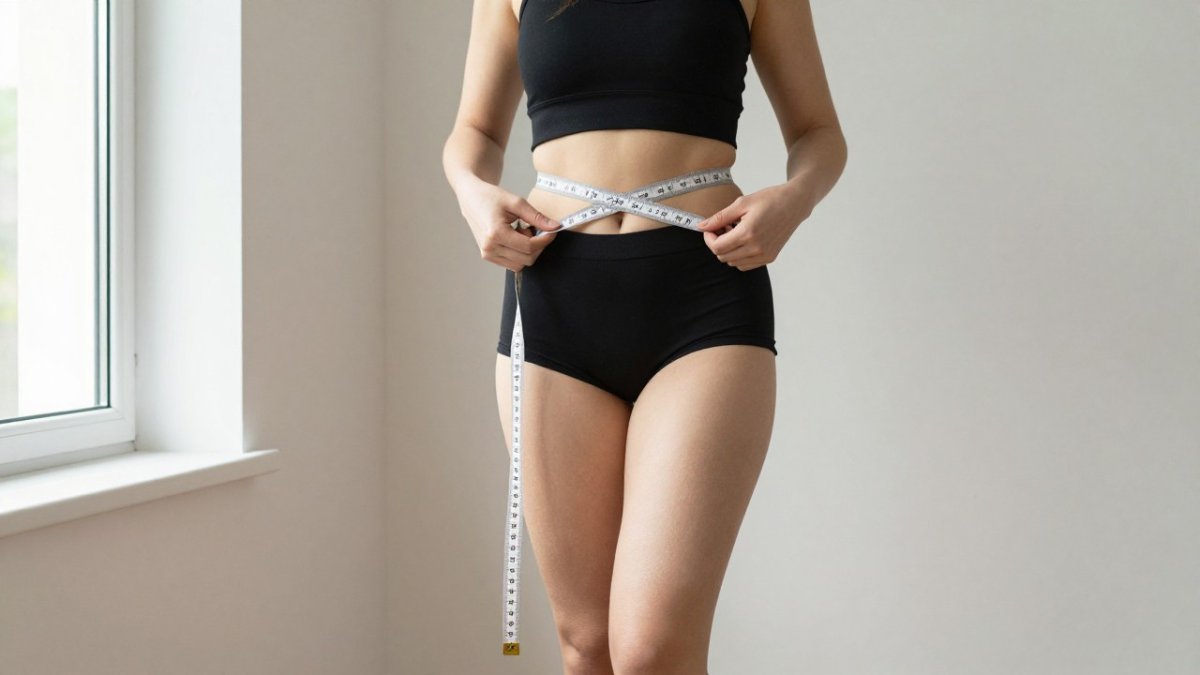
Measuring for scrub trousers is straightforward if you use a soft tape measure and stand naturally. You need three numbers: waist, hips, and inside leg. Take each measurement over light clothing, keep the tape snug but not tight, and write the numbers down.
A common mistake is measuring over thick clothing or pulling the tape tight to hit a "goal" number. Don't. Workwear has to fit the body you actually have on a long shift.
The woman is British.
Measuring the Waist and Hips
Find your natural waistline first. This sits just above the belly button and below the ribs, and it is usually the narrowest point of your torso. Wrap the tape around this point, level all the way round, and breathe normally. Don't suck in.
For hips, wrap the tape around the fullest part of your seat, usually around 20cm below the waist. Keep the tape parallel to the floor. If the tape tilts, the number will be wrong.
Measuring Inseam and Outside Leg
Inseam, also called inside leg, runs from the crotch seam down to where you want the hem to sit. Stand with feet flat and have someone help, or measure a pair of trousers that already fit you well and lay them flat.
Outside leg runs from the top of the waistband down the outside of the leg to the hem. This number helps you compare leg lengths across brands, especially when you are looking at tall or short fittings.
Reading a Scrub Trousers Size Chart
A scrub trousers size chart converts your body measurements into a garment size. Read the chart for the specific style you are buying, not a generic one, because sizing varies between brands and between men's and women's cuts.
Start with your waist and hip measurements, then check the inside leg options. Many scrub ranges offer regular, tall, and short lengths, so your waist size and leg length are chosen separately.
| Measurement | Where to Measure | Typical Use in Sizing |
|---|---|---|
| Waist | Natural waistline, above the navel | Sets the base size |
| Hips / seat | Fullest part of the seat | Confirms size, catches mismatches |
| Inside leg (inseam) | Crotch seam to hem | Chooses short, regular, or tall |
| Outside leg | Waistband top to hem | Compares lengths across brands |
If your waist points to one size and your hips to another, go with the larger size. Scrubs are meant to be comfortable, and you can always adjust the waist with a drawstring.
Choosing the Right Scrub Trousers Leg Length
Leg length is where most sizing errors happen, and it is the easiest thing to fix. Standard scrub trousers come in short, regular, and tall fittings, each hemmed to a different inside leg.
Match your measured inseam to the closest fitting. If you are on the boundary, size up in length rather than down: a slightly longer hem can be turned up, but a short hem cannot be lengthened.
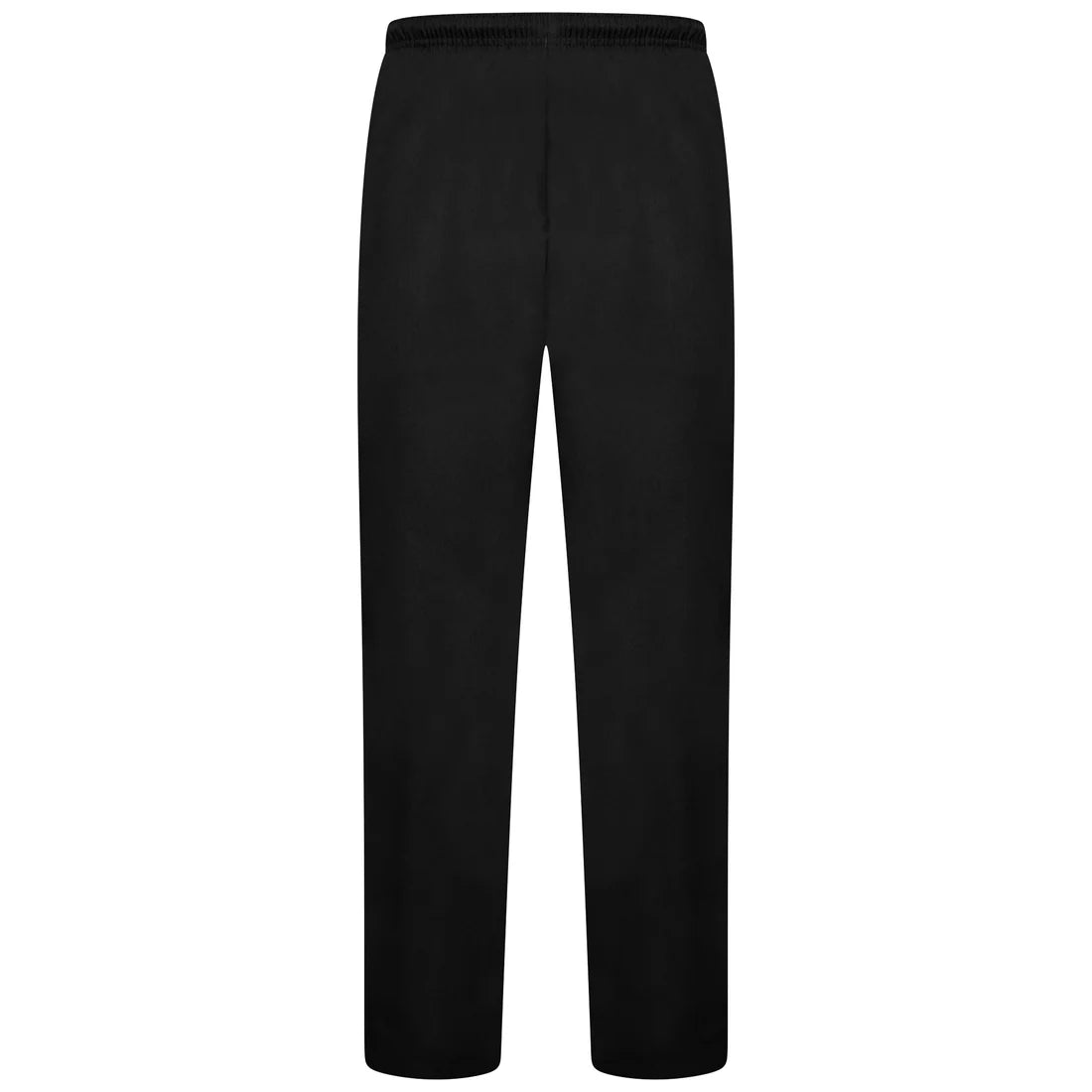
If your measurements point to a regular fit, our regular-leg scrub trousers match the standard length. Taller wearers who need extra length can browse the tall-leg scrub trousers. If your inseam falls below regular sizing, the short-leg scrub trousers keep the hem clear of your shoes.
Watch out: hems that touch the floor are a trip hazard on a ward, and hems that sit above the ankle ride up when you kneel. Aim for the hem to break just at the top of your shoe.
What to Do When You Are Between Scrub Trousers Sizes
Being between sizes is the single most common reason people order two pairs and return one. The usual advice, size up, is a reasonable default, but it is not the whole answer. The right call depends on which measurement is between sizes, how the waistband is built, and how much the fabric gives.
Work through the decision in this order.
1. Decide which measurement is driving the mismatch. If your waist sits in one size and your hips in the next, the hips should win.
2. Check the waistband design before you size up. A fully elasticated waistband with a drawstring will comfortably span roughly one size either way, so sizing up costs you little.
3. Factor in fabric stretch. A polycotton blend with a small elastane content will move with you and recover its shape; a rigid 65/35 polycotton with no stretch will not.
**4.
5. Buy top and bottom separately if needed. Scrubs are sold as separates for exactly this reason.
A simple summary of the trade-offs:
| Situation | Recommended action | Why |
|---|---|---|
| Hips between sizes | Size up | Seat is hard to adjust; tight seat restricts movement |
| Waist between sizes, elasticated waistband | Size up, use drawstring | Drawstring takes in the excess |
| Waist between sizes, flat-front waistband | Try the smaller size first | Less give in the waistband; larger size may hang loose |
| Stretch fabric, waist only tight | Stay in smaller size | Fabric gives and recovers |
| Rigid fabric, any measurement tight | Size up | No stretch to compensate |
| Length between fittings | Choose the longer option | Hem can be turned up, not lengthened |
Watch out: do not size down to chase a neater look.
If you want extra flexibility across a team, a reversible scrub trouser gives you two wear options from one garment and simplifies sizing when different staff members fall on different sides of a size boundary.
Checking Fit for Movement, Rise and Work Tasks
A size chart gets you close, but it cannot tell you whether a pair of scrub trousers will still be comfortable at hour ten of a shift.
The movement tests
- Squat down fully. Pass: the seat stays in contact with your body and the waistband does not slide down. Fail: the seat pulls tight, the centre seam strains, or a gap opens at the back waist.
- Raise both arms overhead. Pass: the waistband stays roughly where it started. Fail: the trousers ride up several centimetres and stay there.
- Kneel on one knee. Pass: the fabric across the knee and thigh does not feel stretched to its limit. Fail: you feel tension behind the knee or across the front of the thigh.
- Walk a short distance and turn. Pass: the hem clears the top of your shoe and does not catch under the heel. Fail: the hem brushes the floor or rides up above the ankle.
- Sit down for a minute. Pass: the waistband does not dig into your middle and the rise does not pull. Fail: you feel pressure at the front or the back waist, or you have to hitch the trousers up as you stand.
Why rise and crotch depth matter more than most guides admit
Rise is the distance from the crotch seam to the top of the waistband. Crotch depth is the related measurement from the crotch seam to the waistband at the back.
A shallow rise pulls when you sit or bend, which is exactly what clinical work involves all day. A rise that is too deep hangs loose and can bunch under a tunic.
Pocket placement and access
Pockets are a fit issue, not just a storage one.
How to run the check before ordering for a team
Watch out: a pair that passes every test while you are standing still can still fail the sit and squat tests.
Fabric Stretch, Shrinkage and Laundering Effects
Fabric changes fit, and laundering changes fabric. A polycotton blend with a small amount of stretch moves with you and holds its shape. Pure cotton scrubs can shrink after the first few hot washes, so a pair that fits perfectly on day one may sit tighter by month two.
Check the care label before you buy. Clinical scrubs are often washed at high temperatures, and fabric that is not built for it will shrink, fade, or lose shape. The Behrens Smart Scrub Trousers are made from a 65% polyester, 35% cotton vat-dyed blend at 195GSM, and are described as built to withstand industrial 65°C washes.
If you are buying for a team, wash one pair first and check the fit before ordering the rest. It is a small step that prevents a costly mistake.
Ordering Your Scrubs With Confidence
Ordering the right size comes down to three numbers and one test: measure your waist, hips, and inside leg, read the size chart for the exact style, and try one pair through a full range of movement before you commit.
At EG Clothing, we supply Behrens Smart Scrub Trousers in short, regular, and tall lengths, at £11.55 a pair, with in-house embroidery and print if you want your team branded. You can browse the full scrub trousers range to compare lengths and colours before you order.
Getting sizing right for a whole team is easier when you can see the options side by side and order a single pair to test first. EG Clothing offers unisex scrub trousers in three hemmed lengths, a durable polycotton blend built for industrial washing, and in-house embroidery so every pair carries your branding consistently.
Frequently Asked Questions
How do I measure myself for scrub trousers?
Use a soft tape measure against light clothing. Measure around your natural waistline, then around the fullest part of your hips or seat. For leg length, measure from the crotch seam to your ankle bone for the inseam, and from waistband to ankle for the outside leg. Write all four numbers down and compare them to the brand's size chart, not to a size you wore elsewhere, because scrub trousers sizing varies between makers.
What should I do if I am between scrub trousers sizes?
Check which measurement is closest to the boundary. If your hips sit at the top of a size, size up so the trousers do not pull across the seat when you bend or kneel. If your waist is the only measurement falling between sizes, stay with the smaller size and use the drawstring or elastic waistband to take up the slack. A fully elasticated waist with an adjustable drawstring, like the Behrens Smart Scrub Trousers, makes this easier.
Do scrub trousers shrink after washing?
Cotton-rich scrubs can shrink, especially after repeated hot washes. Polycotton blends hold their size better. The Behrens Smart Scrub Trousers use a 65% polyester, 35% cotton vat-dyed fabric at 195GSM and are described as suitable for industrial washing at up to 65°C.
Are scrub trouser sizes the same across different brands?
No. Sizes vary between brands, and some use unisex sizing while others cut separately for men and women. Always measure yourself and compare against that specific brand's size chart rather than assuming your usual size will fit. Also check whether the brand offers petite, regular and tall lengths, since leg length changes the fit as much as the waist measurement does.
