

Table of Contents
- Why Small Businesses Switch Workwear Suppliers
- What to Compare in a MyWorkwear Alternative
- Best Custom Workwear Suppliers for Small Teams
- Branded Workwear Turnaround Times Compared
- Workwear Embroidery Services That Last
- Switching Costs and Hidden Fees to Check
- Frequently Asked Questions
Last Updated: September 28, 2026
Why Small Businesses Switch Workwear Suppliers
Most small teams don't leave their workwear supplier over one bad order, but over a pattern: minimum order quantities that don't fit an 8-person team, embroidery that cracks after a dozen washes, and quotes that grow between enquiry and invoice. If you're weighing up a myworkwear alternative for small businesses, the decision comes down to three things: what you pay per garment, how few items you can order, and whether the branding survives a 60°C wash.
What to Compare in a MyWorkwear Alternative
A myworkwear alternative is any supplier that can supply, brand, and deliver uniforms without the constraints of a large-account contract. Compare service models, not just prices: what's included, the smallest order you can place, and how long you'll wait.
Cost Per Garment and What Is Included
Compare the delivered cost, not the list price. A garment price means little if embroidery, setup, and delivery are charged separately. Ask every supplier for a full quote covering garment, decoration, digitising or setup, and carriage. At EG Clothing, a Pro RTX Pro T-Shirt starts at £5.53 and a Pro RTX Piqué Polo at £6.25, with in-house embroidery and print under one roof, one supplier for garment and decoration removes the back-and-forth that slows small orders down.

Minimum Order Quantities for Small Teams
Minimum order quantities are where small businesses get squeezed hardest. Some suppliers set minimums per garment style, per logo, or per order, which makes kitting out an 8-person dental practice awkward. Look for suppliers who take small runs without penalty, then scale up as you hire. If your team is under 20 people, prioritise low or no minimums over the cheapest unit price.
| What to Compare | Why It Matters | What to Ask |
|---|---|---|
| Cost per garment | Reveals the true unit price | Is embroidery included? |
| Minimum order quantity | Decides if small teams qualify | Per style or per order? |
| Setup and digitising fees | One-off cost per logo | Charged once or per run? |
| Carriage and delivery | Adds to every order | Free above a threshold? |
| Turnaround time | Affects when staff are kitted | Standard vs rush? |
Best Custom Workwear Suppliers for Small Teams
The best custom workwear suppliers for small teams are not the ones with the biggest catalogue, but the ones whose commercial model fits a team that orders in tens, reorders unpredictably, and cannot absorb a £300 setup fee on a whim. Here is a cost-benefit model you can run on a single spreadsheet, plus a scoring method that turns a vague 'which supplier feels right' decision into a number you can defend.
The small-business cost-benefit model
Run every shortlisted supplier through the same three-year calculation. It takes about twenty minutes per supplier and exposes the ones whose headline price is a mirage.
- Year-one outlay. Add the first order (garments + decoration + carriage) to every one-off cost: logo digitising, screen setup, sample garment, and any account or onboarding fee.
- Steady-state reorder cost. Take the per-garment delivered price on a repeat order of the same size. This governs your budget from year two onwards.
- Churn and replacement rate. Small teams lose and gain staff constantly. Estimate how many garments you replace per year (a common pattern is 20-40% of headcount for front-of-house roles) and multiply by the reorder price.
- Admin time. Price the hours spent chasing quotes, re-approving artwork, and reconciling invoices. A supplier who charges setup on every run can cost more in admin than in garments.
Scoring suppliers on the criteria that move the needle
Score each supplier out of five on the criteria below, then weight them. For most small teams, minimum order flexibility and setup-fee structure deserve double weight; catalogue size deserves half.
| Criterion | What 'good' looks like for a small team | Weight |
|---|---|---|
| Minimum order quantity | No per-style or per-logo minimum, or a low one with no surcharge | ×2 |
| Setup fee structure | Charged once, with the master digitised file held on your account | ×2 |
| Single-source supply and decoration | Garment and branding under one roof, so one point of contact | ×1.5 |
| Published pricing | Rates you can see before enquiring, not bespoke quotes per email | ×1 |
| Sample before full run | A branded sample available at low cost before you commit | ×1 |
| UK stock holding | Blanks held domestically, so reorders are not tied to import lead times | ×1 |
| Turnaround transparency | A per-stage timeline in writing, not a single headline figure | ×1 |
| Catalogue breadth | Enough styles for your sector, but not the deciding factor | ×0.5 |
What to ask before you commit
- Can they supply and brand in one place, or do you manage two suppliers and two invoices?
- What is the smallest order they will accept without a surcharge, and is that minimum per style, per logo, or per order?
- Is the logo setup fee charged once, or on every reorder?
- Will they hold a master digitised file so reorders match the first run?
- Can they show you a branded sample before a full run?
- What is the standard turnaround, and what does a rush job cost?
- Is pricing published, or do you need a bespoke quote per enquiry?
- Do they hold UK stock, or is everything made to order overseas?
- What happens if a garment arrives faulty, who pays carriage?
EG Clothing is built around this brief: in-house embroidery and print, UK stock, trade pricing, and a service model designed for teams that order in tens rather than thousands.
Branded Workwear Turnaround Times Compared
Branded workwear turnaround times depend on three variables: whether the garment is in stock, whether the logo artwork is ready, and whether decoration is done in-house or outsourced. Suppliers who hold UK stock and decorate on site typically move faster than those who import blanks and send garments away for embroidery. For a small team, that's the difference between kitting out new starters this week or next month.
The four stages, and what each one actually costs you in days
A headline turnaround figure hides where the time goes. Ask for the timeline split into stages, because each stage has a different owner and a different failure mode.
Pro RTX Piqué Polo T-Shirt, 60°C Wash →
| Stage | What happens | Typical duration | Who causes the delay |
|---|---|---|---|
| Stock check | Supplier confirms blanks are held and reserved | Same day to 2 working days | Supplier, if stock is imported |
| Artwork approval | Logo file is checked, sized, and signed off | 1-3 working days | You, if the file is low-resolution or the placement is undecided |
| Decoration | Embroidery or print is run on the garments | 2-5 working days | Supplier, if decoration is outsourced |
| Dispatch and delivery | Packed and shipped to your site | 1-3 working days | Carrier, and whether carriage is tracked |
Kitting out new starters without operational downtime
A small team cannot afford a new starter working in their own clothes for a fortnight, nor a full spare uniform for every role. The practical answer is a two-tier approach.
- Hold a small buffer of unbranded or minimally branded garments in your most common sizes for the roles that turn over fastest. A plain polo in the right colour gets a new starter through their first week while their branded order is in production.
- Order branded garments in a slightly larger run than you need, so you carry one or two spares per size. The marginal cost per garment is far lower than a rush order later.
- Agree a fast-track arrangement up front. Ask your supplier the shortest realistic turnaround for a single garment with your existing digitised logo, and what it costs. Knowing that number before you need it turns a panic into a decision.
- Time orders around known hiring. If you recruit seasonally, place the branded order when the offer is accepted, not when the starter arrives.
When to expect a rush to cost more
Rush charges are usually triggered by jumping the decoration queue, paying for express carriage, or both. A supplier who decorates in-house can often absorb a small rush without a surcharge because they control the queue; one who outsources decoration usually cannot, because they're passing on someone else's expedited fee. If fast turnaround matters, in-house decoration is worth more than a marginally lower garment price.
Workwear Embroidery Services That Last
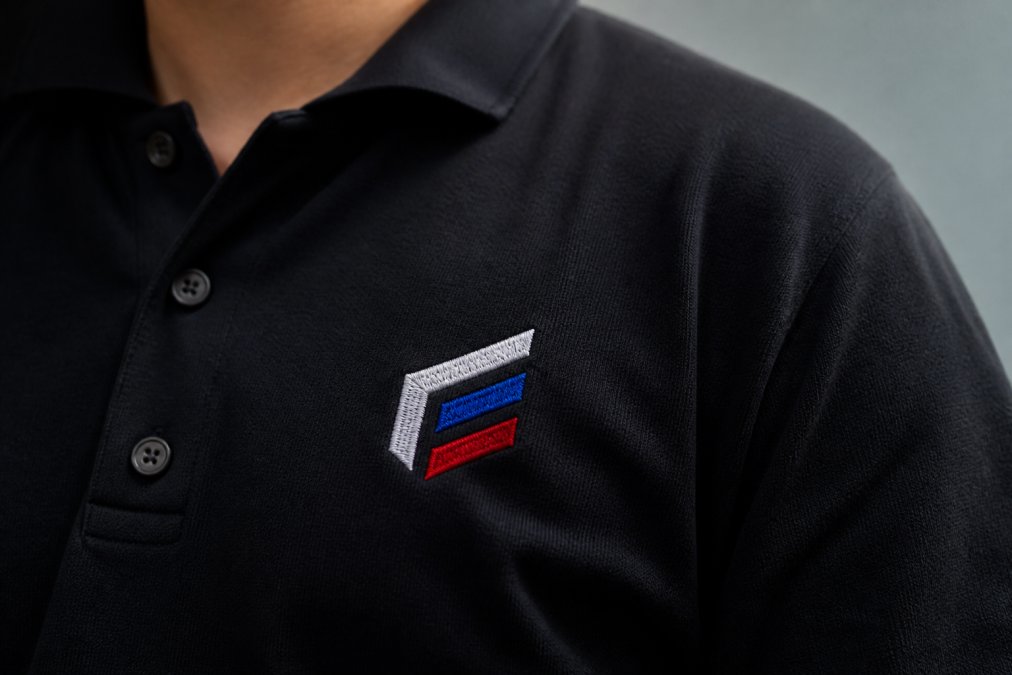
Workwear embroidery services that last share one trait: the decoration is matched to the fabric and the wash cycle. Cracking, fading, and puckering usually trace back to a mismatch between stitch density and garment weight, or a garment that can't take industrial laundering. Choose garments tested for the wash temperatures your team actually uses, then match the embroidery to them.
Switching Costs and Hidden Fees to Check
Switching costs are rarely the garment price. They're the setup fees, sample costs, time spent re-approving artwork, and the risk of a first run that doesn't match expectations. Before you move, get a written quote itemising every charge, and ask specifically about logo digitising, screen setup, and carriage. A supplier quoting one price and invoicing another is the fastest way to sour a switch.
Frequently Asked Questions
What should small businesses look for in a workwear supplier?
Focus on minimum order quantities, per-garment pricing that includes embroidery or print, and realistic turnaround times. Check whether the supplier holds UK stock, because that shortens lead times and avoids import delays. Also ask how they handle logo placement consistency across repeat orders, and whether garments are tested to survive 60°C washes without the embroidery cracking or fading.
How do embroidery and printing costs compare between suppliers?
Most suppliers quote a blank garment price plus a setup or digitising fee, then a per-logo charge. The setup fee is usually a one-off, so it matters less on larger orders. Ask for a full quote covering garment, decoration and delivery. A cheaper blank can end up costing more if the embroidery does not survive repeated industrial washing and you replace garments mid-year.
What is the typical turnaround time for custom workwear orders?
Turnaround depends on whether the supplier holds stock and decorates in-house. Suppliers with UK stock and their own embroidery setup can often complete orders in days rather than weeks. If garments are ordered in from overseas, add shipping time plus decoration. Always confirm the lead time in writing before you commit, especially if you have a site start date or a new team joining.
Is it better to use local or national workwear providers?
Local providers can offer faster delivery and easier returns, but national or online suppliers often hold wider stock ranges and lower prices. For small businesses, the deciding factors are usually turnaround time, minimum order size and whether you can get a sample before committing. A supplier with UK-based stock and in-house decoration gives you most of the local speed advantage without the price premium.
How can small businesses ensure quality when ordering branded uniforms?
Order a sample garment with your logo before placing a full order. Wash it several times at 60°C and check whether the embroidery stays legible and the fabric holds its shape. Confirm the decoration method suits the fabric, and ask about logo placement consistency across batches. Suppliers with in-house embroidery and print control this more tightly than those outsourcing decoration.