

Table of Contents
- Why Professional Embroidery Services Matter for Uniforms
- Custom Embroidery vs Other Branding Methods
- The Embroidery Digitisation Process Explained
- Benefits of Embroidered Uniforms for Business Identity
- Cost of Professional Embroidery Services and What to Expect
- Maintaining Logo Consistency Across Bulk Orders
- Caring for Embroidered Workwear to Preserve Quality
- Frequently Asked Questions
Last Updated: September 20, 2026
Why Professional Embroidery Services Matter for Uniforms
Professional embroidery services for uniforms reinforce brand identity daily. At EG Clothing, construction firms, dental practices, restaurants, and logistics companies have discovered that quality embroidery makes a tangible difference in how their brand is perceived.
Poorly executed stitching looks cheap, cracks after a few washes, and causes logos to shift or distort. Professional embroidery services eliminate these problems through proper digitisation, quality thread, and calibrated machines. Your uniforms stay sharp through repeated industrial laundering.
Professional embroidery services ensure uniforms maintain consistent appearance across all team members, particularly in bulk orders. The embroidery process requires expertise that separates reliable providers from those who don't.
Custom Embroidery vs Other Branding Methods
Custom embroidery competes with screen printing, heat transfer, and direct-to-garment printing. Each method has specific strengths, and choosing the right one depends on your design, fabric, durability needs, and budget constraints.
Screen printing works well for simple designs at high volumes but feels stiff on fabric and cracks after repeated 60°C washing. For industrial workwear, screen printing often underperforms.
Heat transfer and direct-to-garment methods offer photographic detail but don't withstand heavy washing as well as embroidery and can feel plasticky on the skin.
Embroidery uses thread to create designs that become structurally part of the garment, delivering unmatched durability. Embroidered logos survive repeated industrial washing and years of use. The downside is that embroidery works best with simple designs; fine details don't translate well into thread. Embroidery costs more per unit than screen printing, though longevity often justifies the investment.
Construction crews, healthcare staff, and hospitality teams benefit from embroidery's durability. Retail staff in casual branded t-shirts might get better value from screen printing.
The Embroidery Digitisation Process Explained
Embroidery digitisation is the process of converting artwork into a digital file that embroidery machines can read and execute. It's not as simple as uploading a logo and pressing start. The digitisation process requires skill because different fabrics, stitch types, and machine capabilities demand different approaches. Achieving a clean final result relies heavily on the initial stage of preparing artwork for embroidery, which ensures that complex designs translate accurately into the precise stitch paths required for professional uniform branding.
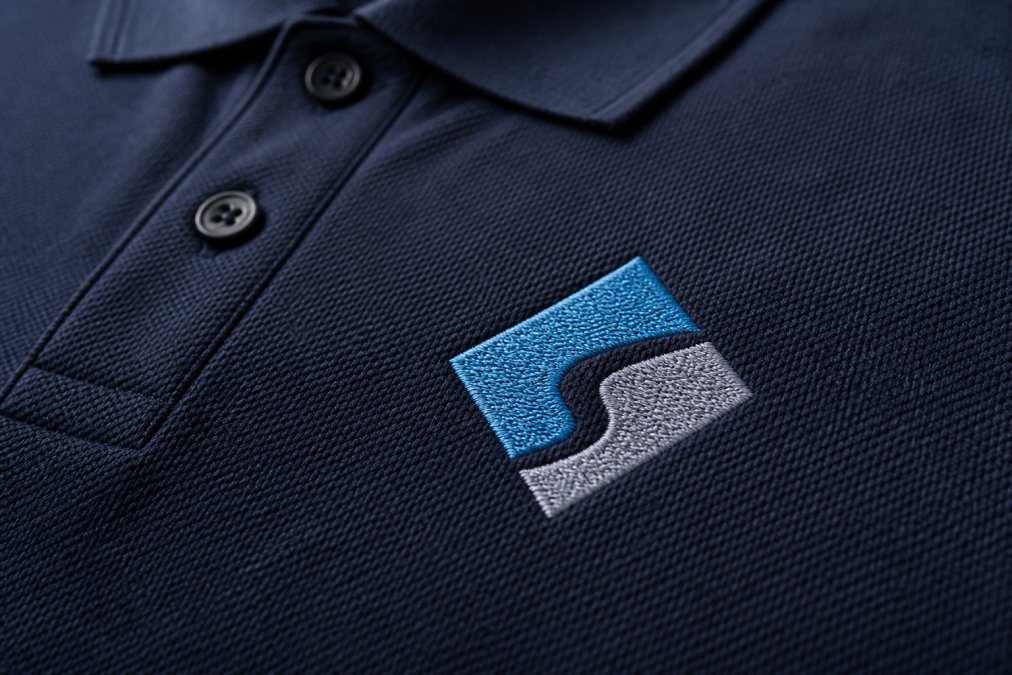
A digitiser analyzes the design and creates machine instructions: stitch placement, thread direction, stitch density, and colour changes. This requires human judgment. Vector artwork (clean, scalable files) is easier to work with than raster images. Digitisers simplify complex designs and adjust stitch density to prevent puckering on delicate fabrics.
The quality of digitisation directly affects the final embroidered result. Poor digitisation creates loose stitches, misaligned colour blocks, or designs that pucker the fabric underneath. Good digitisation produces clean edges, even stitch density, and logos that look intentional rather than accidental. This is why professional embroidery services use experienced digitisers who understand fabric compatibility, garment construction, and machine capabilities.
Submit high-resolution vector files (Adobe Illustrator or similar) for the best results. Low-resolution JPEGs require the digitiser to redraw the design, adding cost and introducing errors.
Stitch count affects cost and appearance. A dense logo might require 15,000 stitches; a simple two-colour design might need 3,000. More stitches increase machine time and puckering risk. Professional digitisers balance quality against practical constraints.
Benefits of Embroidered Uniforms for Business Identity
Embroidered uniforms create visual identity that builds trust and professionalism. When every team member wears the same branded apparel, customers instantly recognise your business.
For dental practices, embroidered uniforms signal cleanliness and professionalism. For construction crews, branded high-visibility gear makes teams identifiable on site. For hospitality staff, embroidered uniforms elevate the guest experience.
The durability of embroidery means your brand investment lasts. A screen-printed logo might fade after 20 washes. An embroidered logo still looks sharp after 100 washes. This longevity translates to consistent brand presentation across months or years of use. Staff don't need to worry about their uniforms looking shabby, the embroidery maintains its integrity through the garment's entire lifespan.
Embroidered uniforms also create a psychological effect on staff. Wearing branded apparel with professional embroidery makes team members feel like they're part of something established and credible. This contributes to team cohesion and professional identity, particularly in roles where appearance matters to customer perception. A restaurant server in a well-embroidered uniform feels more professional than one in a generic shirt with a printed logo.
Pro RTX Piqué Polo T-Shirt, 60°C Wash →
The investment in professional embroidery services pays dividends in brand consistency. When your team looks unified and professional, customers take your business more seriously. This is especially valuable for small businesses competing against larger operations, polished uniforms signal that you care about details and professionalism.
Cost of Professional Embroidery Services and What to Expect
Professional embroidery services involve several cost components: digitisation fees, setup charges, per-unit embroidery costs, and garment pricing. Understanding these components helps you budget accurately and avoid surprises at checkout.
Digitisation typically costs between £30 and £100 per design, depending on complexity. A simple two-colour logo might cost £30. A complex multi-colour design with fine details could cost £100 or more. This is a one-time fee, once the file is created, you can use it for future orders without additional digitisation costs.
Setup fees cover machine preparation and thread colour matching. Expect to pay £15 to £40 per setup, depending on the number of colours in your design. If you're ordering 50 polos with a two-colour logo, you'll pay one setup fee. If you're ordering the same design on five different garment types, you might pay multiple setup fees.
Per-unit embroidery costs range from £2 to £8 depending on stitch count, thread type, and garment complexity. A simple chest logo on a polo costs less than a full-back design on a sweatshirt. The base garment itself adds significant cost, a Pro RTX Piqué Polo costs £6.25 per unit, while a Pro RTX Polycotton Sweatshirt costs £9.82 per unit. Bulk orders reduce per-unit costs, but minimum order quantities vary by supplier.

Total cost for a small order (25 units) of embroidered polos might be:
- Digitisation: £50
- Setup: £25
- Garments: £156 (25 × £6.25)
- Embroidery: £100 (25 × £4)
- Total: £331, or £13.24 per unit
A larger order (100 units) might reduce per-unit embroidery costs to £3, bringing the total to £1,131, or £11.31 per unit. The larger the order, the more the fixed costs (digitisation and setup) spread across units, improving your per-unit price.
Turnaround times typically range from 5 to 15 business days, depending on order size and current capacity. Rush orders are possible but usually cost more.
Maintaining Logo Consistency Across Bulk Orders
Consistency across bulk orders is where professional embroidery services prove their value. When you order 100 embroidered polos, every single one should look identical. In practice, achieving this consistency requires careful process control and quality assurance.
The digitised file provides the foundation for consistency. A well-created file specifies exact stitch placement, density, and colour. The embroidery machine follows these instructions precisely, so consistency depends on the file quality and machine calibration. Professional services verify machine settings before beginning production runs, ensuring that the first garment and the hundredth garment are indistinguishable.
Thread colour matching is a common source of inconsistency. Different dye lots of the same thread colour can vary slightly. Professional embroidery services use Pantone colour matching systems to ensure thread colours remain consistent across orders, even if those orders are placed weeks or months apart.
Caring for Embroidered Workwear to Preserve Quality
Iron embroidered items on the reverse side if ironing is needed. This protects the embroidery from direct heat and pressure. If you must iron the front, use a pressing cloth between the iron and the embroidery to prevent flattening or scorching the thread.
Frequently Asked Questions
Is embroidered workwear more durable than screen printing?
Embroidery offers superior durability for workwear uniforms. Thread is stitched directly into the fabric, creating a bond that withstands repeated washing at 60°C without cracking or fading. Screen printing sits on the surface and can peel or crack after industrial laundering. For uniforms that need to survive frequent washing and maintain professional appearance, embroidery is the more durable choice, especially on garments like the Pro RTX Piqué Polo that are tested to retain definition through repeated high-temperature washes.
What file formats are required for professional logo embroidery?
Professional embroidery services require vector artwork files (AI, EPS, or PDF formats) for the digitisation process. Vector files contain scalable, clean lines that convert accurately into embroidery patterns. Raster images (JPG, PNG) often produce poor results because they cannot scale without losing quality. When submitting your logo, ensure it is a vector file with a minimum of 2cm width to allow proper stitch detail. This ensures your custom embroidery maintains clarity and brand consistency across all uniform pieces.
How should I care for embroidered uniforms to maintain logo quality?
Embroidered uniforms should be machine washed at 60°C on a standard cycle, which is compliant with industrial laundry protocols. Turn garments inside out before washing to reduce friction on the embroidered design. Avoid bleach, fabric softener, and high-temperature drying, as these can weaken thread and cause fading. Dry flat or on a low heat setting. Garments like the Pro RTX Hoodie and Pro RTX Piqué Polo are specifically designed to withstand repeated 60°C washes while preserving embroidery definition, making them ideal for workwear programmes requiring durability.
What is the typical turnaround time for bulk uniform embroidery?
Turnaround times for bulk embroidery depend on order size and complexity. Rush services are often available for an additional fee. Fast turnaround is critical for businesses that need uniforms quickly, EG Clothing combines in-house embroidery with efficient processes to deliver professional results without unnecessary delays.