

Table of Contents
- Why Branded Workwear Matters on Construction Sites
- Durable Construction Workwear Fabrics That Survive Site Conditions
- Best Embroidery vs Printing for Workwear: Which Lasts Longer?
- Meeting Safety Standards: EN ISO 20471 and PPE Compliance
- Cost-Benefit Analysis: Branded vs Unbranded Construction Gear
- Maintenance and Care to Extend Garment Longevity
- Conclusion
- Frequently Asked Questions
Last Updated: September 17, 2026
Why Branded Workwear Matters on Construction Sites
Branded workwear for construction firms is more than a uniform; it is a working safety and identity tool. On a busy site, a clear logo and consistent colours help clients, site managers and the public identify who is who at a glance. This guide from EG Clothing covers how to choose gear that lasts, meets the right standards and still looks sharp after months of hard use.
The practical case is straightforward. A crew in matching, well-fitted gear reads as organised and professional, which builds client confidence before a single tool is picked up.
Durable Construction Workwear Fabrics That Survive Site Conditions
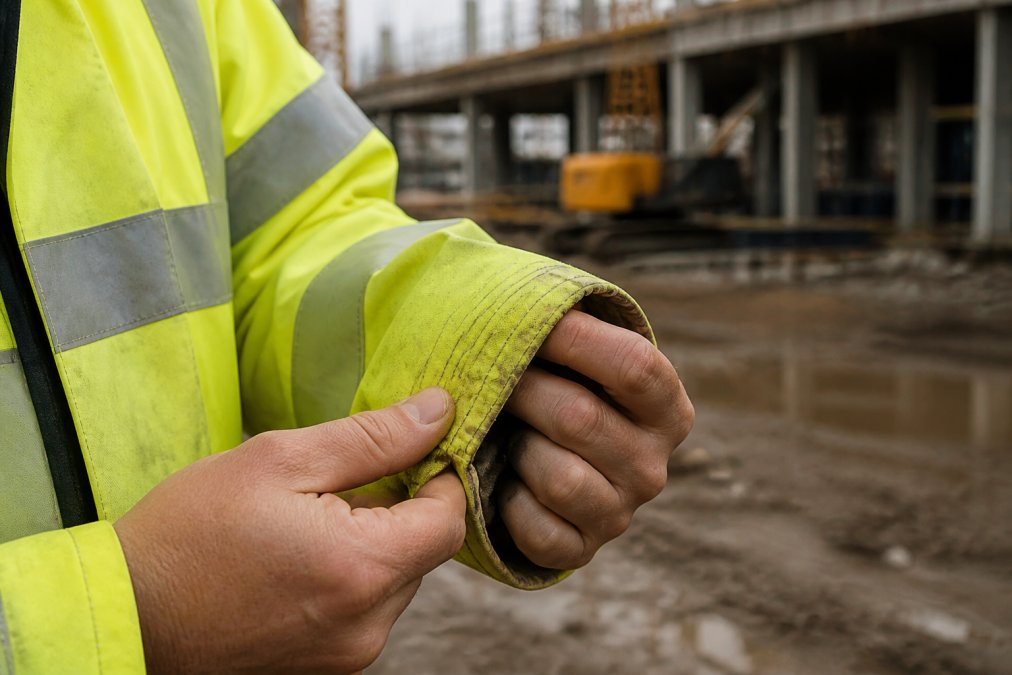
Durable construction workwear fabrics are the materials engineered to resist tearing, abrasion and weather while staying wearable through a full shift. The right choice depends on the trade and the season, not on what looks best in a catalogue. Most supplier pages list fabric types without explaining why one suits a groundworker and another suits a site manager, which is the gap this section closes.
Matching fabric to the trade
Different roles put different stresses on a garment, so a single 'heavy-duty' fabric is rarely the right answer across a whole crew:
- Groundworks and civils, high abrasion from concrete, aggregate and machinery; favour heavier cotton-rich blends with reinforced knees and hem
- Steel fixing and scaffolding, snagging and tearing risk; look for ripstop weaves and bar-tacked stress points
- Site management and surveying, more time in vehicles and offices; lighter, breathable fabrics with a smarter cut work better than the heaviest weights
- Winter and wet-weather work, waterproof and wind-resistant outer layers over breathable base layers, rather than one heavy garment that traps sweat
What to check on the garment itself
- Reinforced stitching at stress points such as shoulders, knees and pocket edges
- Breathable fabrics that manage sweat during physical work
- Weather-resistant finishes for wind and light rain
- Industrial-grade cotton-polyester blends that hold their shape
- Fabric weight, heavier weights resist abrasion better but take longer to dry and feel stiffer in summer
Reinforced Stitching and Textile Quality
Textile quality decides how long a garment survives. Double-stitched seams, bar-tacked pockets and heavier fabric weights all add life. A common mistake is buying on price per unit alone; cheaper garments often fail at the seams first, which means replacing them sooner.
- Whether the seam allowance is wide enough to resist pulling under load
- Whether pocket corners are bar-tacked rather than single-stitched
- Whether the zip is a metal or heavy-duty nylon type suited to daily use
- Whether reflective tape is stitched on as well as bonded, so it survives washing
The sustainability angle most suppliers ignore
Durability and sustainability are the same conversation. A garment that lasts three winters instead of one uses roughly a third of the material and generates a third of the waste over the same period, which matters to firms reporting against environmental, social and governance (ESG) criteria or bidding for contracts with sustainability requirements. When comparing options, ask suppliers about recycled polyester content, whether the fabric is certified to a recognised recycled-content standard, and whether the garment can be repaired rather than replaced.
Best Embroidery vs Printing for Workwear: Which Lasts Longer?
Embroidery generally outlasts printing for workwear because the design is stitched into the fabric rather than applied to the surface. For most construction gear, embroidery is the better long-term choice, though printing still has its place.
Here is how the two compare:
| Method | Durability | Best For | Notes |
|---|---|---|---|
| Embroidery | High, survives repeated washing | Logos on jackets, polos, fleeces | Feels premium, adds texture |
| Screen printing | Medium | Large flat designs, t-shirts | Can crack over time if stretched |
| Heat transfer | Medium to high | Small detailed logos, numbers | Fast to apply, good for names |
Logo Placement and Consistency Across Bulk Orders
Consistent logo placement is where many suppliers fall short. Between batches, logos can drift in size or position, which looks untidy on site. The fix is simple: agree a placement spec up front, with exact measurements, and hold every order to it.
Meeting Safety Standards: EN ISO 20471 and PPE Compliance
High-visibility clothing for site work must meet the relevant safety standards, and in the UK the key one is EN ISO 20471. This standard sets out how much reflective and fluorescent material a garment needs to be classed as high-visibility. Personal protective equipment (PPE) more broadly must be suitable for the risks on site and fit the wearer properly.
Cost-Benefit Analysis: Branded vs Unbranded Construction Gear
Unbranded gear usually costs less per unit up front. Branded gear costs more initially but tends to deliver better value once you factor in durability, replacement rates and the branding benefit. The question is not which is cheaper today, but which costs less over the life of the garment. This is the gap most supplier pages skip: they quote a unit price and stop, leaving procurement managers to justify the spend to a finance director on instinct alone.
Building a whole-life cost model
A defensible comparison rests on four inputs, all of which you can estimate from your own records rather than a supplier's brochure:
- Unit cost, the quoted price per garment, including any branding setup charge amortised across the order
- Expected service life, how many months the garment stays presentable and compliant before replacement
- Replacement rate, the proportion of a batch you replace each year, driven by seam failure, fading, tape degradation and loss
- Branding and admin cost, embroidery or print setup, re-orders, and the internal time spent chasing multiple suppliers
Where the branding benefit sits
Brand visibility is harder to quantify but not imaginary. A consistent logo on every site works as low-cost advertising to passing clients, principal contractors and the public, and it supports the identity and morale points covered earlier in this guide. For firms bidding for work, a crew in matching, well-maintained gear can influence how a main contractor assesses competence during pre-qualification visits.
Procurement mechanics that reduce cost
- Consolidate suppliers, one source for garments, branding and PPE cuts admin time and reduces the risk of mismatched logo placement between orders
- Agree trade pricing tiers, bulk bands reward forecasting your annual headcount rather than ordering ad hoc
- Standardise the range, fewer garment lines means simpler stockholding, easier sizing swaps and better bulk pricing
- Budget for a replacement float, holding a small reserve of common sizes avoids emergency single-unit orders at premium prices
Exact costs depend on quantity, garment type and branding method, so check current pricing before budgeting. The point of the model is not a precise figure but a defensible one: it lets you show a stakeholder why the branded option wins over the life of the kit, not just on the invoice.
Maintenance and Care to Extend Garment Longevity
How you wash and store workwear decides how long it lasts. Most garments fail early because of poor care, not because the fabric was weak. A few habits make a real difference.
- Wash at the temperature on the care label, not hotter
- Turn garments inside out to protect embroidery and prints
- Avoid fabric softener, which coats reflective tape and breathable fabrics
- Air-dry where possible instead of tumble drying
- Inspect reflective tape and seams each month
- Repair small tears before they spread
Conclusion
Keeping a construction crew safely and consistently kitted out is harder than it looks, especially when you need gear that meets safety standards, survives site conditions and carries your brand properly. That is where EG Clothing comes in. With in-house embroidery and print, fast turnaround times and trade pricing, EG Clothing gives firms one reliable source for durable, compliant, well-branded workwear.
Frequently Asked Questions
What fabrics are most durable for construction site uniforms?
Poly-cotton blends with reinforced stitching offer the best balance of breathability, tear resistance and colour retention. Look for fabrics with a weight of at least 240gsm for work trousers and 300gsm for softshell jackets. Waterproof and weather-resistant finishes add another layer of protection for outdoor crews. High-visibility garments should meet EN ISO 20471 and use certified retroreflective tape that survives industrial washing without losing visibility.
How does branded workwear improve professional image on site?
Branded workwear creates instant recognition with clients, inspectors and the public. A consistent logo placement across all garments signals that your firm is organised and safety-conscious. It also helps site managers spot authorised personnel quickly, which matters for workplace safety and security. Teams wearing quality branded uniforms report higher morale and a stronger sense of belonging, which reduces staff turnover on long projects.
What is the best embroidery vs printing method for workwear logos?
Embroidery is the better choice for most construction workwear because it withstands repeated industrial washing and abrasion without cracking or fading. It works best on polo shirts, fleeces and softshell jackets where the logo sits on a flat panel. Screen printing suits high-volume orders on smoother fabrics but can deteriorate faster on garments exposed to heavy wear. Heat transfer is a middle option for detailed multicolour designs on performance fabrics.
How do I ensure logo consistency across multiple bulk orders?
Ask your supplier to keep your digitised logo file on record and confirm the exact placement measurements in writing before each run. A reputable provider will use the same thread colours, backing and stitch count every time. Request a pre-production sample for large orders and check that the logo position matches previous batches. This prevents the misalignment issues that commonly occur when switching between suppliers or when artwork is recreated from scratch.