

Table of Contents
- Why Durable Logo Printing Matters on Construction Workwear
- Workwear Embroidery vs Printing: Which Method Lasts Longer
- Hi-Vis Jacket Logo Printing: Maintaining Safety and Visibility
- Logo Printing on Waterproof Jackets: Durability in Wet Conditions
- Selecting Durable Garments for Logo Printing
- How to Care for Printed Workwear: Wash, Storage, and Longevity
- Conclusion: Investing in Durable Branded Construction Gear
- Frequently Asked Questions
Last Updated: October 11, 2026
Why Durable Logo Printing Matters on Construction Workwear
When your construction crew arrives on site in branded gear with durable logo printing for construction gear, the logo isn't just decoration, it's a statement about your business. But here's what most teams discover too late: cheap printing cracks after a few washes, fades in direct sunlight, and peels away when exposed to oil or sweat. Within months, your team looks unprofessional, and you've wasted money replacing garments that should have lasted a year.
Durable logo printing for construction gear is the difference between workwear that builds your brand and workwear that embarrasses it. At EG Clothing, we've worked with construction firms, logistics companies, and site managers who've learned this lesson the hard way. The solution isn't just picking any printing method, it's matching the right technique to the garment, the environment, and your budget.
Construction workwear faces punishment that office uniforms never will. Your team works in harsh environments: rain, mud, oil, chemicals, UV exposure, and constant mechanical abrasion. The printing method you choose must withstand all of it. Screen printing, heat transfer, embroidery, and vinyl each have different durability profiles. Some hold up to repeated 60°C industrial washing. Others fade after a season on site.
This guide covers the printing methods that actually last, how to select garments that hold logos properly, and what to do after purchase to keep your branding visible for years. We'll show you the trade-offs between cost, durability, and customisation options so you can make an informed decision for your team.
Workwear Embroidery vs Printing: Which Method Lasts Longer
Embroidery and printing are the two dominant methods for branded construction workwear, but they're fundamentally different approaches with different durability profiles.
Embroidery uses thread stitched directly into fabric. It's mechanically locked in place by thousands of needle passes. For construction gear, embroidery wins on longevity. The thread doesn't fade in UV light, doesn't crack after washing, and resists oil and chemical exposure better than most printing methods. Embroidered logos on a Pro RTX Piqué Polo T-Shirt (tested to withstand 60°C machine washing) can last through hundreds of wash cycles without visible degradation. The stitching remains intact even after industrial laundering.

The trade-off is cost and complexity. Embroidery requires setup fees, longer production times, and higher per-unit pricing than printing. For small orders or intricate multi-colour designs, embroidery becomes expensive. It also works best on structured fabrics like piqué or heavy cotton blends. On thin or stretchy materials, embroidery can pucker the fabric.
Screen printing applies ink directly onto fabric through a mesh screen. It's faster, cheaper for large runs, and handles detailed artwork and full-colour designs better than embroidery. But durability depends entirely on ink quality and fabric preparation. Budget screen printing, the kind that costs £1-2 per garment, uses inks that crack and fade quickly. Premium screen printing with proper curing and pre-treatment can last 50+ washes on workwear. The problem is distinguishing between the two when you're ordering.
For construction gear, embroidery is the gold standard for durability. But if budget or design complexity makes embroidery impractical, high-quality screen printing with proper curing runs a close second.
Hi-Vis Jacket Logo Printing: Maintaining Safety and Visibility
High-visibility garments add another layer of complexity. The fluorescent fabric itself must remain visible and bright. A logo printed on a hi-vis jacket can't compromise the safety markings or fade in ways that reduce visibility.
The Pro RTX High Visibility T-Shirt and Pro RTX High Visibility Polo Shirt are designed for outdoor workwear where visibility is non-negotiable. Both use polyester high-visibility fabric with reflective strips. When adding logos to hi-vis gear, you're working with a material that's already demanding: the fabric is tightly woven, often treated with finishes to maintain fluorescence, and sensitive to heat.

Embroidery is safer for hi-vis garments because it doesn't apply heat or chemicals to the surface. The thread sits on top without affecting the underlying fabric treatment.
Logo placement matters too. Reflective strips on hi-vis gear are legally mandated for safety compliance. Your logo must not obscure or interfere with these strips. The most common approach is placing logos on the chest or sleeves, away from the reflective bands. This keeps your branding visible while maintaining the garment's safety function.
Logo Printing on Waterproof Jackets: Durability in Wet Conditions
Waterproof and weather-resistant jackets are essential for construction crews working outdoors. The RTX Two-Layer Soft Shell Jacket combines shower-proof and windproof protection with a microfleece lining. But waterproof fabrics present a unique challenge for logo printing: the coating that repels water also repels ink and thread adhesion.

Embroidery is the better choice for waterproof jackets. The needle punches through the coating, anchoring thread into the fabric layers beneath. Once the thread is locked in, it won't peel away as the fabric moves and flexes. The stitching remains intact even after repeated washing and outdoor exposure.
For the RTX Two-Layer Soft Shell Jacket and similar weatherproof construction gear, embroidery is the recommended approach. It handles the coating, survives repeated flexing, and maintains appearance through years of use.
Selecting Durable Garments for Logo Printing
Not all construction workwear is created equal. The garment itself determines how well any printing or embroidery will hold up. Fabric weight, weave structure, and fibre composition all affect logo longevity.
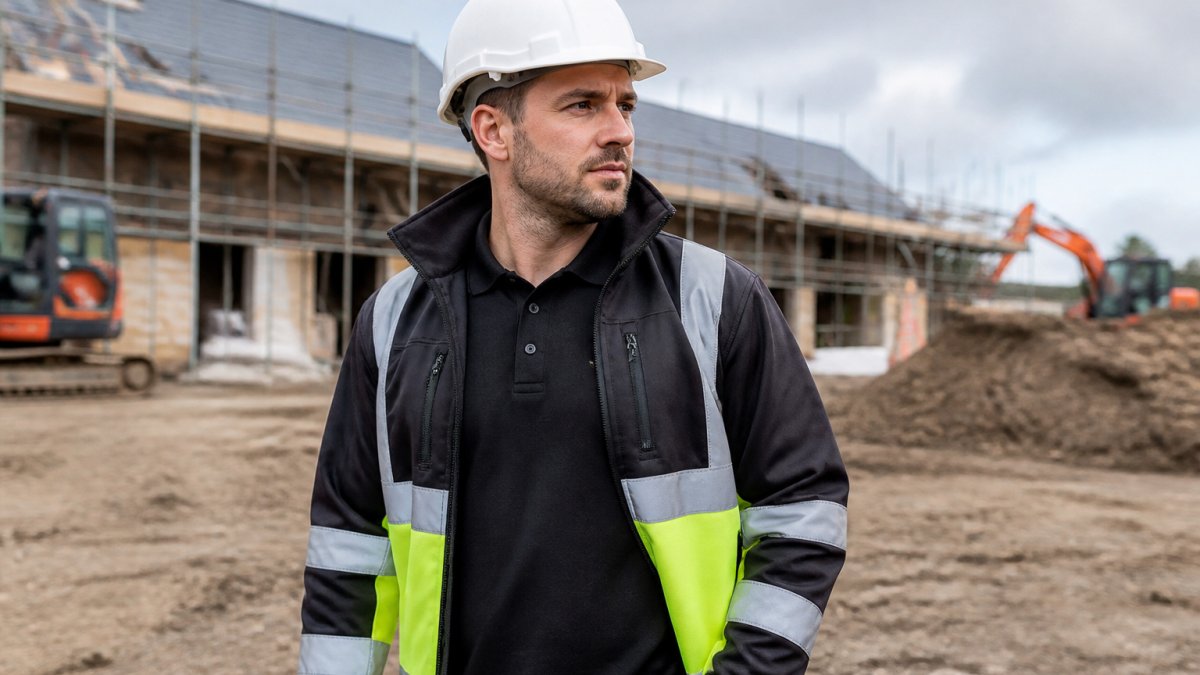
Heavy fabrics hold logos better than light ones. A 200gsm piqué polo (like the Pro RTX Piqué Polo T-Shirt) provides a stable base for embroidery. The structured weave doesn't shift or stretch, so stitching stays locked in place. Lightweight cotton t-shirts are cheaper but less stable, embroidery can pucker the fabric, and printing sits on a surface that moves more.
Fabric fibre composition matters too. Cotton and cotton-blend fabrics (like the Pro RTX Pro T-Shirt's cotton blend) accept embroidery and printing well. Polyester is more slippery and requires different inking techniques.
Pro RTX Piqué Polo T-Shirt, 60°C Wash →
Garments designed for repeated industrial washing hold logos longer. The Pro RTX Polycotton Sweatshirt and Pro RTX Pro 1/4 Neck Zip Sweatshirt are both tested to withstand 60°C machine washing without shape loss or fabric degradation. This stability means logos stay intact through the same wash cycles.
Surface texture affects printing quality too. Smooth, flat fabrics accept printing and embroidery evenly. Textured or brushed fabrics (like the soft interior of the Pro RTX Hoodie Cotton Blend) can cause uneven ink application or thread tension issues. If you're embroidering a textured garment, discuss this with your supplier, they may recommend adjustments to the design or process.
For construction workwear, choose garments rated for industrial use. Look for reinforced seams, tested wash durability, and fabric weights above 150gsm. These foundations mean your logos will outlast cheaper alternatives.
| Garment Type | Fabric Weight | Best For | Wash Rating |
|---|---|---|---|
| Pro RTX Piqué Polo | Heavy piqué | Embroidery, professional look | 60°C industrial |
| Pro RTX Pro T-Shirt | Standard cotton blend | Printing or embroidery | 60°C industrial |
| Pro RTX Polycotton Sweatshirt | Heavy cotton-poly | Embroidery, layering | 60°C industrial |
| Pro RTX Hoodie | Heavy cotton-rich | Embroidery, casual workwear | 60°C industrial |
| RTX Two-Layer Soft Shell | Coated polyester | Embroidery only | 40°C (waterproof) |
| Pro RTX High Visibility T-Shirt | Polyester blend | Specialist screen printing | 40°C (hi-vis fabric) |
How to Care for Printed Workwear: Wash, Storage, and Longevity
Once your branded workwear arrives, how you wash and store it determines whether logos last one season or three.
Washing temperature is critical. Most construction workwear is designed for 40°C or 60°C washing. The Pro RTX Piqué Polo T-Shirt, Pro RTX Pro T-Shirt, and Pro RTX Polycotton Sweatshirt all handle 60°C washing. But printed logos can degrade at higher temperatures, especially if the ink wasn't properly cured.
Turn garments inside out before washing. This protects the logo from direct abrasion against other garments and the washing machine drum. Embroidered logos are particularly vulnerable to snagging if washed outside-out. Screen-printed logos benefit from reduced friction.
Use a mild detergent and avoid bleach or harsh chemicals. Bleach can fade both the garment and the logo. Heavy-duty stain removers may contain solvents that attack ink or weaken thread. For oil or chemical stains common on construction sites, pre-treat with a gentle solvent-based stain remover, then wash normally.
Avoid the tumble dryer when possible. Heat can further cure screen printing (which sounds good, but can also cause cracking if the ink is already at its limit), and it stresses embroidery threads. Air dry or use a low-heat setting.
Store branded workwear in a cool, dry place away from direct sunlight. UV exposure fades logos over time, even when the garment isn't being worn. A dark storage cupboard or locker is ideal. If garments will be stored for extended periods, ensure they're completely dry before packing to prevent mildew.
Inspect logos regularly. Small cracks or peeling at edges can be caught early. If you notice damage, stop wearing that garment and replace it. Continuing to wear a garment with a damaged logo spreads the damage further and can eventually compromise the garment itself.
Conclusion: Investing in Durable Branded Construction Gear
Your construction team's uniforms are on the front line every day. They face mud, rain, chemicals, UV light, and constant wear. When a logo fades or peels within months, it signals to clients and site visitors that your business cuts corners.
The right approach to durable logo printing starts with choosing the right printing method for your environment. Embroidery outlasts printing on waterproof and hi-vis gear.
Then select garments built for construction use, heavy fabrics, reinforced seams, tested wash durability. The Pro RTX range, from the Piqué Polo to the Two-Layer Soft Shell, is engineered for repeated industrial washing and holds logos reliably. At EG Clothing, we combine in-house embroidery and printing services with garment selection expertise, so your branded workwear is built to last from the start. We work with teams of any size, from small dental practices to large construction crews, and offer trade pricing for bulk orders.
Start branding your team with workwear designed to perform. Get started with EG Clothing and see how durable, professionally branded gear builds team identity and client confidence.
Frequently Asked Questions
What is the most durable way to put a logo on construction workwear?
Embroidery typically outlasts printing on construction gear because stitched logos bond directly to the fabric and resist mechanical abrasion, fading, and chemical exposure better than ink-based methods. The Pro RTX Piqué Polo holds embroidered logos through repeated industrial washing, making it a proven option for harsh environments.
Is embroidery or printing better for construction uniforms?
Embroidery is generally superior for construction uniforms because it resists oil, solvents, and UV exposure without degrading. Many construction teams use embroidery for corporate branding on polos and sweatshirts. Choose based on your logo design: simple text and small graphics suit embroidery.
How should branded construction clothing be washed to preserve logos?
Wash embroidered or printed workwear inside out at 60°C (or the temperature specified by your supplier) using a gentle cycle. Avoid bleach, fabric softener, and high heat drying, which can fade logos and weaken stitching. Air dry when possible, or use low heat. For waterproof jackets with logos, wash at 40°C and air dry to preserve the protective coating. Check care labels before the first wash, and if logos show wear after several washes, contact your supplier to discuss durability or replacement options.
Can you print a logo on a waterproof work jacket?
Yes, embroidery is the most reliable method for waterproof jackets; the stitches penetrate the outer layer without compromising the membrane. The Pro RTX Two-Layer Soft Shell is designed with embroidery space for logos, making it ideal for branded teamwear in wet conditions.
How do I prevent logos from peeling or fading on construction workwear?
Choose garments tested for repeated industrial washing (60°C minimum) and select embroidery methods suited to the fabric. Embroidery resists fading and peeling because stitches are mechanically locked into the weave. Store branded workwear in a cool, dry place away from direct sunlight to slow UV fade. If logos begin to crack or peel, contact your supplier early, some faults are covered under warranty, and early intervention can extend the lifespan of your stock.